A friend of mine spent six weeks following a recovery protocol that was supposed to fix a shoulder he had been protecting since December. He picked the peptide that everyone online told him to pick. He found the dose chart that everyone online told him was the right one. He ordered from a brand that everyone online told him was credible.
On day forty-three he tapped me on the shoulder he could not externally rotate and said the protocol was not working.
We pulled the vial out of his fridge. He had been mixing it with unsterile tap water using a 25-gauge needle, swirling it like a cocktail, and storing the reconstituted solution on its side at the front of the fridge door where the temperature swings every time anyone opens it.
He did not have a dosing problem. He had a chemistry problem.
What you are actually holding
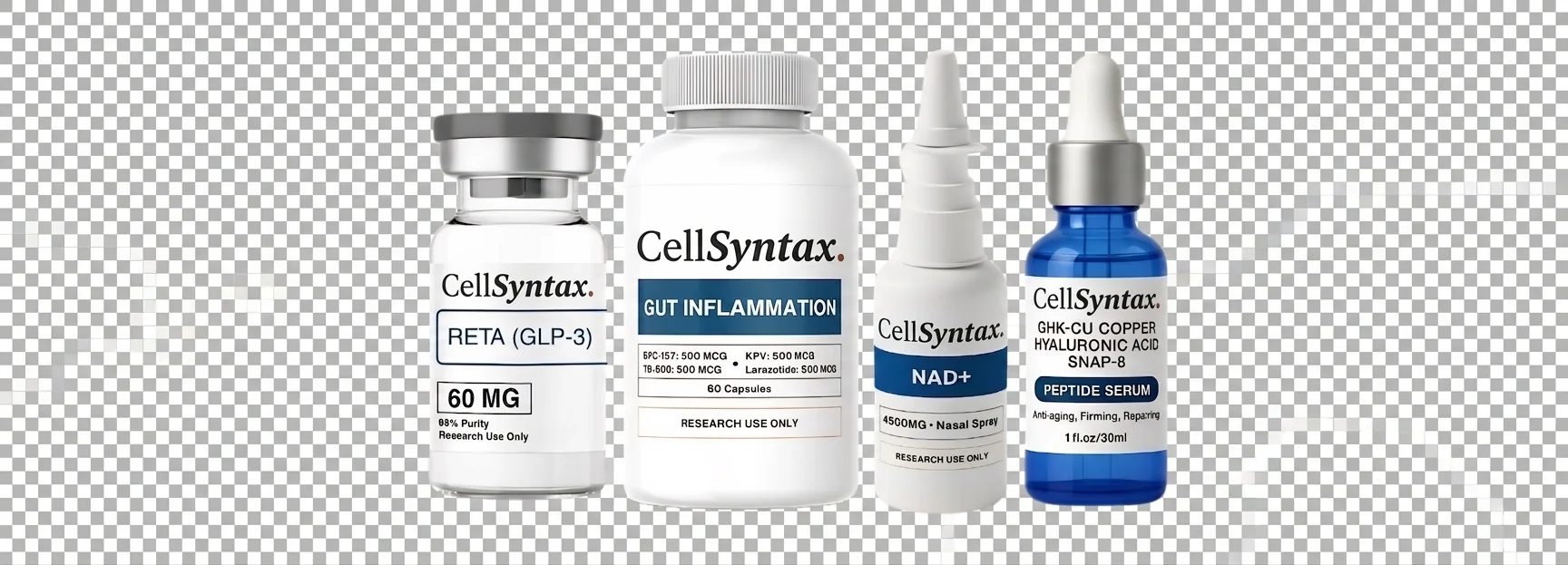
Most subcutaneous peptides ship as a lyophilized powder. Lyophilized is a fancy word for freeze-dried. The vial you receive contains a few milligrams of a fragile amino acid chain sitting in vacuum, protected from oxygen and water until you reintroduce both.
The moment you push bacteriostatic water through the rubber septum you start a clock. The peptide is now in solution, exposed to temperature, light, and time. Every variable from this point forward is degrading the molecule. The only question is how fast.
Peptides are sequences. The sequence is the active ingredient. If the sequence is broken, the dose is irrelevant.
Mishandling does not produce a less-effective version of the peptide. It produces a broken peptide. The molecule has a primary structure that either is or is not intact. There is no halfway version of BPC-157 that does sixty percent of what BPC-157 does. There is BPC-157 and there is a soup of fragments that no longer binds to anything useful.
The four things that matter
Ignore the dosing chart for a second. If you get these four right, the dose will work. If you get them wrong, no dose will save you.
1. The diluent
Use bacteriostatic water. Not sterile water, not saline, not tap water filtered through anything. Bacteriostatic water is sterile water with 0.9 percent benzyl alcohol added as a preservative. The preservative is the whole point. It is what keeps the reconstituted solution from becoming a bacterial culture in the days after you mix it.
2. The injection vector
Drip the water down the inside wall of the vial. Do not spray it directly onto the lyophilized cake. The peptide cake is a delicate crystalline structure and high-velocity water will physically shear the molecules before they can dissolve.
3. The mixing motion
Do not shake. Do not swirl aggressively. Roll the vial slowly between your palms or invert it gently a few times. Peptides are mechanically fragile. Cavitation from shaking breaks bonds the same way it would break a wine. Wait the full minute or two for the solution to clarify on its own.
4. The storage
Reconstituted peptide goes in the back of the refrigerator, not the door. The back is colder and the temperature is more stable. Most peptides hold their potency for about thirty days reconstituted. Some are shorter. None last forever.
What this means for ordering
Buy from a source that ships the lyophilized form, ships it cold if the peptide requires it, and includes a documented batch test with every order. The dose you read about online assumes the protein you injected is the protein on the label. That assumption is doing a lot of work.
If you are looking at our catalog and wondering why the vials list a powder weight and a separate “reconstituted at” concentration, this is why. We want you to know exactly what landed at your door and exactly what it should look like after you mix it.
Back to the friend
He swapped the tap water for bacteriostatic water, stopped shaking the vial, moved it to the back of the fridge, and ran the protocol for another four weeks. The shoulder is fine now. The peptide was not the problem. The thirty seconds were.
Most of what looks like a peptide question is actually a chemistry question. The next essay is on the questions to answer before you ever open the vial.