01
Documentation first
Product pages should not outrun the available records. COA entries show documentation status by catalog item.
CellSyntax is a research-material catalog built around conservative product pages, account-gated catalog access, and COA documentation status.
Many research-material catalogs ask buyers to trust broad product claims. CellSyntax is being built in the opposite direction: material identity, lot documentation, and COA entries first.
All products are research chemicals for in vitro laboratory use only. They are not drugs, dietary supplements, foods, or cosmetics, and are not for human or veterinary use. See Intended Use.
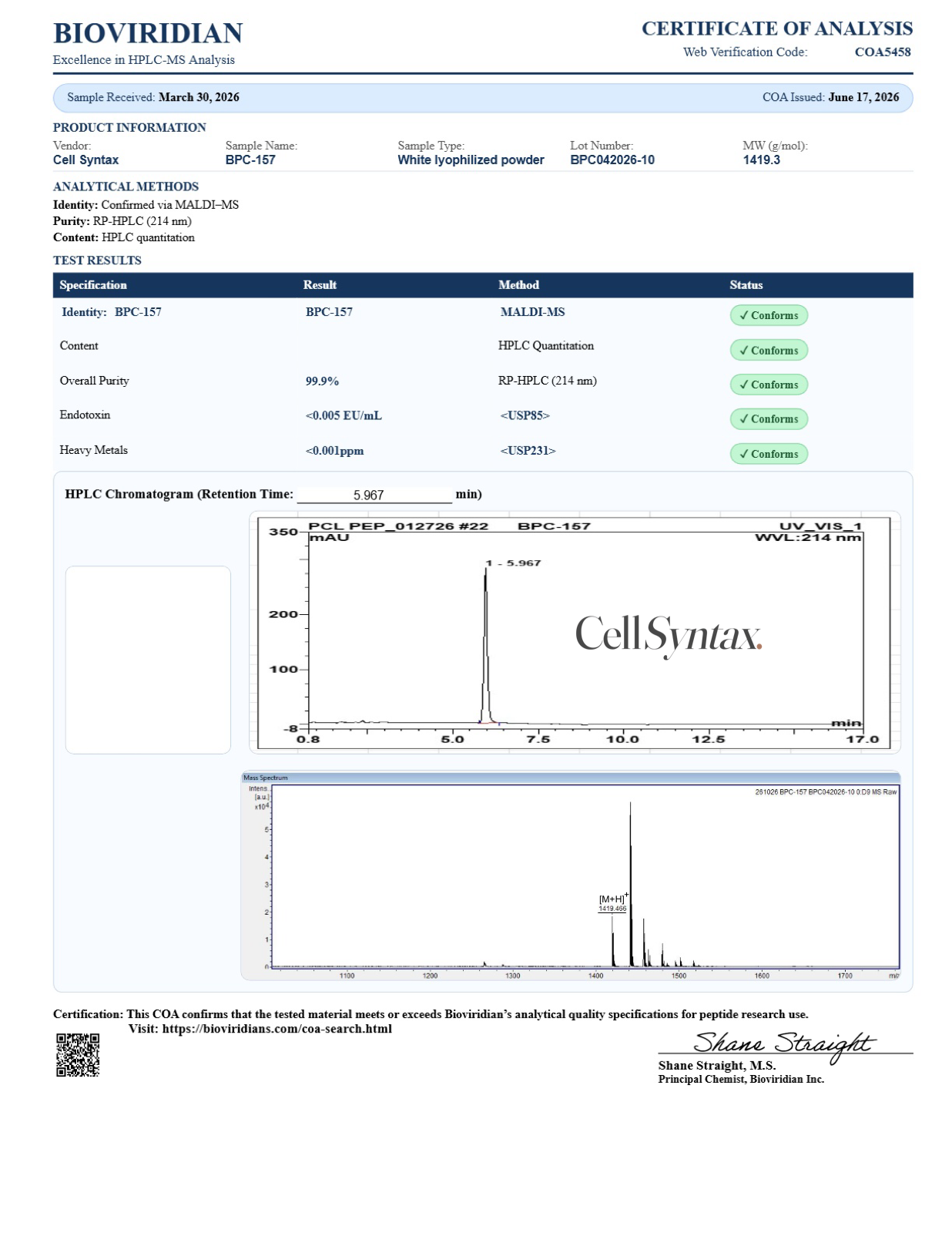
Product pages should not outrun the available records. COA entries show documentation status by catalog item.
Buyers can review lot identifiers, method names, dates, issuers, and measured fields when batch documents are posted.
Catalog, product, and cart pages need a signed-in account with a verified email. The COA library and research library stay public.
These short notes explain how to read posted COAs, method names, lot matching, and research-use order boundaries.
Learn how to read a peptide Certificate of Analysis by checking the material, lot, issuer, methods, results, and document limits.
Library · Record VerificationA step-by-step process for matching a peptide COA to its material, lot, laboratory, date, and public verification record.
Library · Peptide Purity TestingLearn how peptide purity testing is reported, why identity and purity are separate measurements, and what a purity percentage cannot establish.
Library · Lot MatchingA conservative note on matching catalog items, lots, and posted COA documents.
Library · Supplier EvaluationEvaluate a research peptide company through lot-specific COAs, third-party testing records, methods, identifiers, and public verification.